Discover how to grow a profitable business without compromising your values in this episode with Whitney Owens. Learn how to build sustainable income, market ethically, and create a business that supports both your clients and your life.
493: Profit with Integrity: Building an Ethical Business that Sustains Growth with Whitney Owens
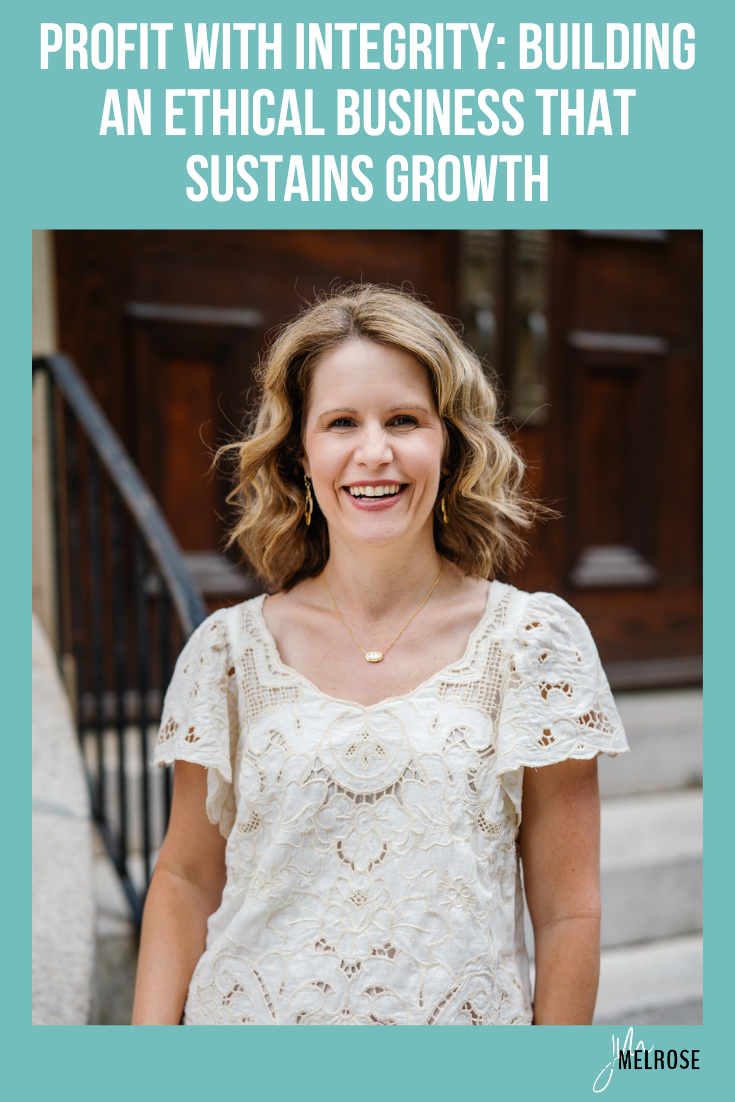
Whitney Owens is a business owner and consultant based in Savannah, Georgia, where she runs a thriving group practice, Water’s Edge Counseling, with multiple locations.
In addition to her local practice, she leads Wise Practice Consulting, where she works with private practice owners across the country, often from a faith based perspective. With a background in counseling and faith integration from Richmont Graduate University, she has experience across a wide range of clinical settings and has built multiple practices over the years.
Whitney is an author of the book The Practice of Becoming A Lent Devotional for Faith-Based Practice Owners. She is a coach and and a mother of two, balancing business and family while continuing to grow and support others in building sustainable, values aligned practices.
When you hear the phrase profit with integrity, what does that mean to you?
Profit with integrity is defined as building a business that is both financially successful and aligned with personal values. It means operating with honesty in how you communicate, in the services you provide, and in the way you show up for clients.
Integrity is about doing things well and staying grounded in what you believe is right, while also allowing your business to generate profit above and beyond. There is a belief that these two things do not always go together, but they can when approached with intentionality.
A business does not have to sacrifice values in order to be profitable. Both can exist together when decisions are made thoughtfully and with purpose.
Jenny adds that integrity plays an even bigger role in today’s world, especially with the amount of content and messaging people see on social media. It can be difficult to know what is real and what is not.
When integrity is present, it builds trust and creates a deeper connection. That alignment becomes something people can feel, and it makes a significant difference.
Why do you think so many entrepreneurs feel tension between making money and staying ethical?
Whitney explains that much of this tension comes from guilt. There is a common belief that making money, or becoming rich, is somehow wrong.
What “rich” means can vary, but the emotional response is often the same. This is especially noticeable in faith based spaces, where the idea of earning money from work that helps others can feel uncomfortable.
In fields like counseling or therapy, there can be a belief that the work should be done purely out of service. Charging for it can feel like it conflicts with that purpose.
Without being paid, however, it becomes unsustainable to continue offering that help. In reality, making money allows the work to continue and expand.
Jenny shares that these money beliefs are often shaped early in life.
The way money was talked about growing up, and how people with wealth were perceived, can deeply influence how someone feels about earning and keeping money as an adult. That can create internal conflict, even when the work being done is meaningful and impactful.
Whitney reflects on her own experience and how this tension has shown up as her business has grown. Even with success, there can be discomfort in talking about it, especially around peers from earlier stages of life.
There can be a sense of embarrassment, even when there is nothing wrong with being profitable. At the same time, there is an awareness that making money allows for greater impact and opportunity.
That tension between doing good work and feeling comfortable receiving financial success is real for many entrepreneurs. It is something that often requires ongoing mindset work and a shift in how value and profit are viewed.
How does a business owner clarify their core values before scaling?
For many business owners, values are not something that gets defined at the beginning.
In the early stages, the focus is simply on getting things up and running. It is about bringing clients in, generating income, and doing whatever it takes to move forward. There is often little time or space to pause and think about mission or values.
As the business begins to grow, that lack of clarity can start to create problems. Questions begin to come up about direction, hiring, and decision making. That is when the need for clear values becomes more obvious.
Whitney explains that about a year ago, as her team expanded, it became necessary to get aligned. The team needed a shared understanding of how they operate and what they stand for.
The process involved bringing the team into the conversation. Feedback was gathered through a survey, and from there, clear value statements were created.
The result was five core values that now guide the business. These values are not just words. They are used in hiring decisions, daily operations, and overall direction.
Since implementing this, there has been a noticeable shift. There is less confusion and more alignment. Everyone understands the standard and how to function within it.
Instead of people moving in different directions, the team is working together with clarity and purpose. That alignment has contributed to growth and a stronger trajectory forward.
Jenny adds that values also create connection through story. Often, those values are rooted in personal experiences and the deeper reason behind the work.
When those stories are shared, they help attract both the right team members and the right clients. It becomes easier for people to see what the business stands for and decide if it aligns with them.
Whitney also shares a practical way values have been integrated into the hiring process. By using their core values, interview scenarios were created to help identify whether potential hires naturally align with those standards.
Each value is paired with specific questions, allowing for a more consistent and insightful evaluation. Over time, this has made it much easier to recognize patterns and determine who is the right fit.
While values are critical for hiring and building a team, clients come with their own values and perspectives. A strong therapist is able to meet clients where they are, so the focus remains on aligning the team internally while serving a wide range of individuals externally.
How do you grow without overpromising or overdelivering to the point of burnout?
One of the biggest ways to avoid burnout is through delegation.
If there is something that does not need to be done personally, or someone else on the team can do it, it should be handed off. This approach allows the business owner to focus on what truly moves the business forward instead of trying to carry everything alone.
A strong team is essential to making this work. That team must be aligned with the business’s core values. Without that alignment, there will be constant tension and stress.
When the right people are in the right roles, everything begins to function more smoothly, and the overall experience of running the business improves significantly.
Over time, Whitney intentionally rebuilt her team and implemented a more structured approach using EOS from the book Traction. This shift created a solid leadership team that now shares in decision making.
Where there was once decision fatigue and overwhelming responsibility, there is now shared ownership. In many cases, the team handles hiring and firing decisions, sometimes without needing direct involvement.
This change has created space to focus on growth instead of getting stuck in daily operational details. Delegation and leadership support have become key to sustaining both the business and personal well-being.
While some may feel they cannot afford to build a team, Whitney emphasizes that the cost of not doing so can be even greater, especially when it comes to mental and emotional strain.
What advice would you give someone who realizes they’ve built a business model that doesn’t feel good anymore?
This experience is more common than people think. Businesses, much like life, move through seasons. What once worked may no longer feel aligned, and that does not mean something has gone wrong. It simply means change is needed.
The first step is recognizing that seasons shift. Just like children grow and change, businesses evolve over time. Even core values can shift as a business grows and the team changes. That awareness can bring a sense of relief and perspective.
From there, it becomes important to step back and create distance from the day to day operations. When someone is constantly in the business, it can be difficult to clearly see what is actually happening.
Taking a step back allows for reflection and clarity. This could look like attending a retreat, joining a mastermind, or investing in a space where new perspectives can be gained.
Whitney shares that in her own experience, this process led to going back to the foundation. Values were redefined, the mission was rewritten, and the leadership structure was rebuilt. Sometimes the best path forward requires revisiting the beginning and rebuilding from there.
Jenny reinforces the importance of stepping away to gain perspective. She notes that seasons, such as summer, can naturally shift how a business performs, and it is important not to make reactive decisions during those times.
Instead, taking time to evaluate what is working, what needs adjustment, and where energy should be focused can lead to more intentional growth.
Ultimately, when a business no longer feels aligned, it is an invitation to pause, reflect, and realign. With clarity and intention, it becomes possible to either move forward with renewed direction or make meaningful changes that better support both the business and the life behind it.
If someone listening wants to audit their business for integrity, where should they start?
The first place to start is with yourself. It begins with looking at how you present your business and how you communicate your services.
Are you speaking in a way that truly meets the needs of the people you serve, or are you focused more on your own needs? That distinction matters, because integrity shows up in how well your messaging aligns with the people you are trying to help.
From there, it is important to look at your policies and procedures. Take time to ask whether they actually reflect who you are as a business.
Do they align with your values, or are there areas where things feel off? This kind of reflection helps uncover gaps between what you say you stand for and how the business is actually operating.
The next layer is your team. Whitney emphasizes paying close attention to behaviors, conversations, and how work is being carried out day to day.
Integrity is not just a concept. It is something that should be visible in how people communicate and follow through. One of the exercises used within her business is evaluating team members based on each core value.
Each person is reviewed and marked according to whether they consistently demonstrate those values.
This creates clarity around expectations and opens the door for honest conversations. If someone is not meeting the standard, it becomes an opportunity to address it directly.
Specific examples can be shared, along with a clear explanation of what needs to improve. Team members are given the chance to step up and align with the values.
However, if that alignment does not happen, it becomes clear that they may not be the right fit. One person who is not operating with integrity can impact the entire team, so it is important to address it rather than ignore it.
EOS stands for Entrepreneur Operating System and is a structured business framework introduced in the book Traction. It is designed to help businesses organize operations, improve accountability, and create clarity as they grow.
At its core, the system separates the visionary role from the operational role. The business owner focuses on vision and direction, while an integrator manages day to day operations. Together, they build a leadership team that oversees different areas of the business.
Each team member has clear metrics to meet, and regular meetings are structured in a way that drives real progress. Quarterly planning is also a key component, where goals are set and broken down into actionable steps with clear accountability.
While it is often used by larger businesses, Whitney shares that even smaller businesses can benefit from applying its principles. Once implemented, it created significant clarity, reduced decision fatigue, and improved how the business operates overall.
4 Tips to Marketing & Networking with Churches
4 Tips to Marketing & Networking with Churches is a practical guide designed to help business owners, especially counselors, confidently connect with church leaders without feeling salesy or unsure of what to say.
The guide walks through the entire process, from how to approach and schedule a meeting with a pastor to what to actually say once you are in the room. It focuses on removing the pressure to “sell” and instead emphasizes being authentic, listening well, and prioritizing the needs of the church first.
Rather than leading with a pitch, the approach encourages building genuine relationships, understanding what support is needed, and then clearly communicating how your services can provide value. The result is a more natural and effective way to network, rooted in connection, trust, and service.
If you haven’t already grabbed your 30-minute launch plan guide, make sure to head to the show notes and download it.
Action Steps:
- If you liked this episode of Influencer Entrepreneurs, please subscribe and leave a fabulous review!
- Join the conversation on Instagram by tagging Jenny when you’re listening to the podcast. She’ll send you a personal message whenever you tag her.