Learn the 3 top strategies to grow your organic audience in a world of AI. Discover how to create authentic content, build trust, and attract the right people without chasing every trend.
505: The 3 Top Strategies To Grow Your Organic Audience in a World of AI with Chardét Ryel
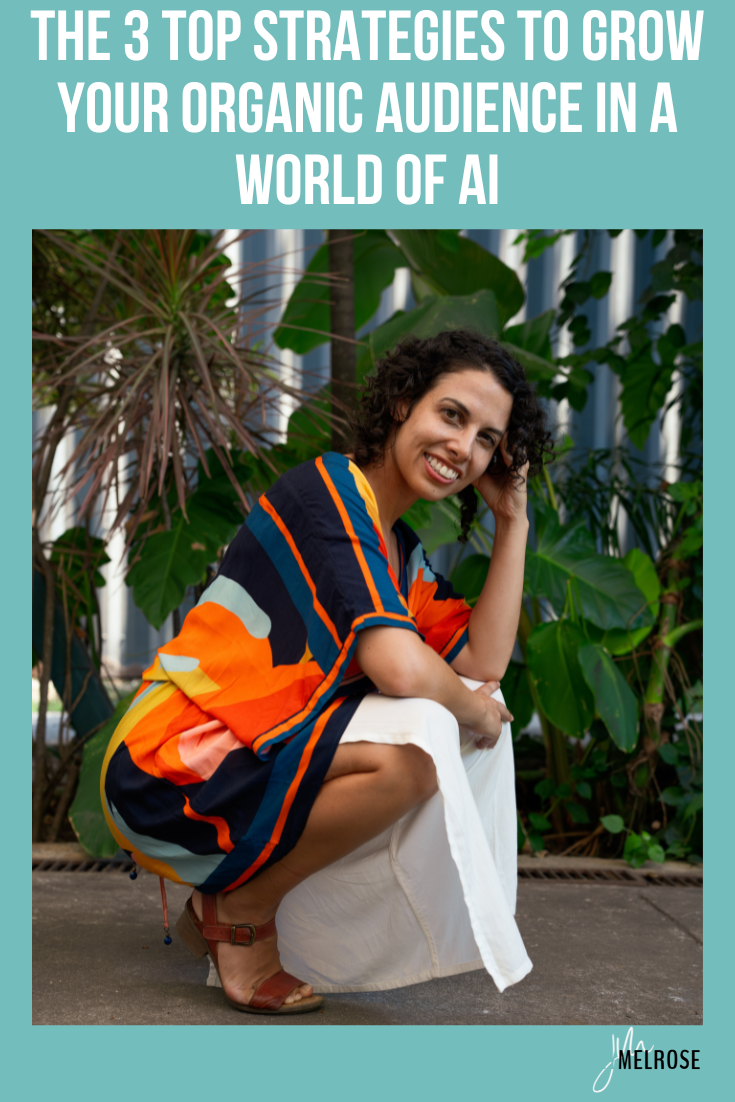
Chardét Ryel is a visibility mentor, podcast strategist, and host who helps women grow their businesses by sharing their message with confidence and authenticity.
After spending more than a decade as a wellness entrepreneur, she discovered her passion for helping business owners increase their visibility, primarily through podcasting, while staying true to themselves instead of chasing algorithms.
As the founder of Feel Good Nakd and Her First Three Years, Chardét combines emotional intelligence with practical visibility strategies to help entrepreneurs amplify their message in a sustainable way.
She is a Certified Behavior Change Specialist, a two time Forbes featured entrepreneur, host of two Top 200 podcasts, and has spent more than a decade mentoring hundreds of women to build businesses that align with their purpose.
Her entrepreneurial journey began in 2013 after leaving a toxic job and facing eight months of unemployment. Like many business owners, her first few years were filled with both successes and setbacks, teaching her firsthand that entrepreneurship is often much messier than it appears online.
That experience inspired her to create Her First Three Years, a community where women can openly share the realities of building a business, learn from one another, and find support through every stage of the journey.
How Has Building an Audience Changed in the Age of AI?
Building an audience today looks very different than it did a decade ago. Chardét explains that around 2010, entrepreneurs could simply experiment.
Competition was low, creating a website or YouTube video required significant technical knowledge, and there was far less pressure to optimize every piece of content. People could publish, play with ideas, and discover what worked without worrying about algorithms or searchability.
That landscape changed dramatically after 2020.
A massive wave of entrepreneurs, coaches, therapists, and online business owners entered the digital space, raising the bar for everyone.
At the same time, technology made content creation much easier. AI can now help generate course material, newsletters, and countless other forms of content with very little effort.
While that accessibility has created more opportunities, it has also created more competition. As a result, audiences have become more skeptical.
Their attention spans are shorter, and they have become much more familiar with online marketing. They already know where the webinar is leading, what the email sequence is likely to sell, and what comes next.
Because of that, simply producing more content is no longer enough. Meaningful connection has become far more important than chasing quick attention with three second videos or surface level marketing tactics.
Is AI Really Making Organic Growth Harder for Business Owners?
Many business owners believe AI has made organic growth more difficult, but Chardét sees it differently. She believes AI has actually created an opportunity for entrepreneurs who are willing to sound like themselves.
While many people are relying heavily on AI generated content, much of it lacks personality, unique positioning, and an authentic tone of voice. That creates an opening for business owners who understand their brand and know exactly who they are speaking to.
Tone of voice has become one of the biggest differentiators.
Whether someone is creating videos, newsletters, or long form content, audiences are becoming increasingly skilled at recognizing content that feels robotic.
Chardét notes that some marketers now intentionally leave in small imperfections, such as casual wording, natural punctuation, or an occasional misspelling, simply to reinforce that a real person is behind the content.
She acknowledges that AI certainly makes creating content easier, but that does not mean it should replace the creator’s voice.
Organic reach is still possible. It simply requires creating content that reflects your unique perspective instead of sounding like everyone else.
How Can Business Owners Create Content That Feels Human and Builds a Real Connection?
For Chardét, creating human centered content starts with capturing the way she naturally speaks.
As someone who learns best through audio, she often records a voice note before writing a newsletter, sales page, or other piece of content. Rather than outlining every detail, she simply talks through her ideas as if she were having a conversation.
She then reviews the transcript to identify the exact words, phrases, and patterns she naturally uses. Those become the foundation for the written content.
AI can still play a role in the process, but it should be guided by the creator’s authentic voice.
Instead of allowing AI to generate generic copy, she recommends instructing it to use your exact wording, your tone, and your natural way of communicating. Used well, AI becomes an assistant rather than the author.
The same principle applies to video content.
Years ago, creators worked hard to remove every mistake, pause, or stumble. Today, those small imperfections often make content feel more genuine. A quick laugh, a moment of correction, or an unscripted response reminds viewers they are interacting with a real person rather than polished marketing copy.
Jenny shares a personal example of how powerful voice can be in building recognition. At a conference, several women failed to recognize her until she stood up and asked a question. The moment they heard her voice, they immediately knew who she was.
That experience reinforced an important lesson. People do not just connect with your words. They connect with your voice.
The natural inflections, personality, and even regional accents become part of your brand, making podcasting and spoken content especially powerful ways to build trust and authentic relationships.
What Are Three Proven Strategies to Grow an Organic Audience?
Growing an organic audience does not have to mean creating more and more content. Chardét shares three strategies that work together to increase visibility without leaving business owners stuck on the content creation treadmill.
The first is creating long form content.
Whether it is a podcast, YouTube channel, blog, or even a Substack newsletter, committing to one piece of long form content each week creates a foundation for sustainable growth. While many people assume blogs are no longer relevant, she points out that they are valuable not only for readers but also for Google and AI search.
Long form content builds something short form content often cannot. It builds deeper trust.
In a world where audiences are increasingly skeptical and quick to wonder, What are you trying to sell me? long form content gives people the opportunity to get to know your perspective before they ever become a customer.
The second strategy is searchability, which naturally overlaps with long form content.
A podcast, YouTube video, or blog can all be optimized to answer the exact questions people are already searching for. That makes your content easier to discover long after it is published.
Chardét reflects on her first fitness business in 2013, when she ran one of only five outdoor boot camps in New York City. At the time, searchability hardly mattered because there was very little competition. Today, with thousands of similar businesses online, creating searchable content has become essential.
The third strategy is building borrowed audiences. Very few businesses grow in isolation. Instead, visibility expands when entrepreneurs collaborate with others who have already built trust with their own communities.
That might mean appearing as a podcast guest, partnering with another brand, hosting a live conversation, or participating in another collaborative opportunity that introduces you to a warm audience.
These partnerships increase visibility while also reducing the pressure to create everything alone.
Jenny adds another strategy that ties all three together: repurpose your content.
One podcast episode can become a blog post, which becomes an email newsletter, which leads readers back to your website where they discover additional resources, products, and services. Rather than constantly creating something new, every piece of content serves multiple purposes and reaches people in different ways.
Chardét agrees and rarely creates anything that cannot be reused at least three different times. After all, business owners are not just content creators. They are running businesses.
Creating content that disappears after twenty four hours is rarely the best use of their time.
She also reminds entrepreneurs that audiences cannot recognize what makes them different if every piece of content looks like everyone else’s.
By combining searchable content with an authentic, slightly unscripted voice, business owners give people a reason to remember them instead of scrolling past.
How Do You Balance Searchable Content With Authentic Connection?
Searchability is important, but attracting the right audience matters even more. Chardét explains that searchable content can generate a great deal of traffic without producing meaningful results if it does not match the searcher’s actual intent.
She learned this lesson firsthand while growing her fitness business on YouTube. One workout video unexpectedly went viral, attracting more than 26,000 views in just seven months.
The engagement looked impressive, with comments and strong viewership, and she expected those viewers to join her paid membership. None of them converted.
When she looked more closely, she realized she had attracted people looking for a single, free workout rather than individuals searching for an ongoing fitness program.
She had created content that generated attention, but not content that attracted the audience she actually wanted to serve.
That experience completely changed how she thinks about searchability. Rather than targeting broad topics, she encourages business owners to create content around very specific problems.
For example, a therapist specializing in eating disorders could publish content about healthy eating, but that topic would attract a broad audience, many of whom would never become clients. Creating content around binge eating, however, speaks directly to someone experiencing that specific challenge and actively looking for help.
Search intent matters. It is not enough to attract traffic. The goal is to attract the people who need exactly what you offer.
This is another reason niching down is so important. Trying to appeal to everyone often leads to getting lost among competitors, while speaking directly to a clearly defined audience makes it much easier to stand out.
Before someone decides whether they like your personality or your approach, they first want to know one thing: can you solve the exact problem they’re facing?
That question should shape every piece of searchable content you create.