How vicarious trauma and vicarious resilience affect therapists, business decisions, boundaries, and the ability to build sustainable income beyond the therapy room.
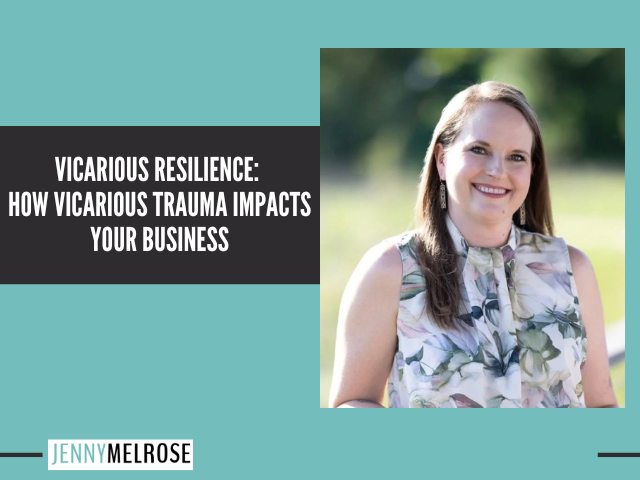
519: Vicarious Resilience: How Vicarious Trauma Impacts Your Business with Jenny Hughes
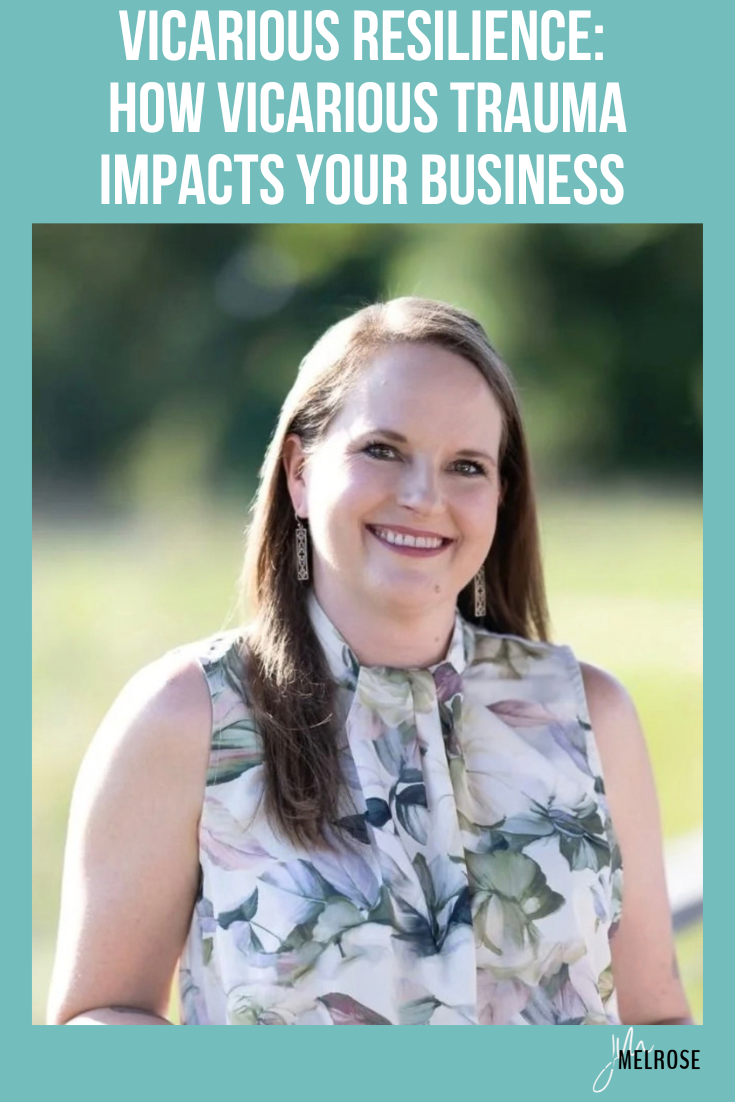
Jenny Hughes, PhD, is an award winning trauma psychologist, author, and founder of The BRAVE Trauma Therapist Collective. She specializes in treating trauma and PTSD and has worked with clients across the lifespan.
Through her clinical work, Jenny recognized the need for greater community, support, and normalization around vicarious trauma among therapists and other helping professionals.
Her work now focuses on helping trauma exposed teams address vicarious trauma while recognizing the positive impact of vicarious resilience. Through The BRAVE Method, Jenny teaches therapists and other helpers how to recognize the resilience they witness in others and use it as a renewable source of energy in their work.
Her biggest passion, right now, is teaching about the concept of vicarious resilience and how it can be a renewable energy source for therapists and helpers and healers once they know about it.
What is vicarious trauma?
Vicarious trauma is often used interchangeably with terms like secondary traumatic stress and compassion fatigue, but Jenny Hughes explains that each has its own distinct meaning.
Vicarious trauma is the cumulative effect of working as a helping professional and absorbing the experiences of others over time. Therapists, medical providers, educators, and lawyers may find that what they hear and witness gradually changes how they view the world.
Jenny describes it as having a sponge that absorbs the difficult things encountered through work. When that sponge isn’t wrung out, the accumulated strain can show up as irritability, unusual fatigue, avoiding work, or even overworking as a way to cope.
Although these terms can overlap, they describe different experiences. Compassion fatigue is the feeling that your cup is empty and you have little left to give.
Secondary traumatic stress involves PTSD like symptoms caused by exposure to traumatic experiences, while burnout can leave someone feeling so depleted that they need to leave their work to protect themselves.
How can overwhelm or vicarious trauma affect business decisions?
Vicarious trauma is a normal part of helping work, Jenny Hughes explains, and it cannot be completely avoided.
However, when the accumulated stress isn’t addressed, the brain and body can shift into survival mode. The part of the brain responsible for thoughtful planning and decision making becomes less accessible, making it harder to respond strategically.
In business, this can show up as a scarcity mindset, where owners feel they must hold on to everything rather than delegate or let go. Business owners with employees may begin micromanaging, while others may respond by withdrawing, playing small, or people pleasing.
These survival responses can also affect marketing and growth. Instead of advocating for themselves and their businesses, putting themselves out there, or taking calculated risks to reach new clients, owners may focus on protecting themselves from further stress.
When business decisions are being driven by survival mode, opportunities for growth can become much harder to recognize or pursue.
How can vicarious trauma affect a clinician’s ability to grow beyond the therapy room?
When someone is operating in survival mode, creativity and the ability to think outside the box become much harder. Jenny Hughes explains that expanding beyond clinical work can already feel intimidating for therapists, who are trained to protect their licenses and may worry about whether nonclinical offerings are appropriate.
Understanding that it is okay to create courses, memberships, speaking opportunities, and other nonclinical services is an important first step.
But when someone is overwhelmed, it can be difficult to feel confident moving forward. Even after starting a new offer, survival mode can make it harder to create, organize, plan, and follow through.
With too many tasks and unfinished projects competing for attention, the overwhelm can eventually lead someone to abandon the idea altogether.
How can vicarious trauma and vicarious resilience help explain the guilt around making more money?
Jenny explains that vicarious trauma and vicarious resilience are two sides of the same coin.
While vicarious trauma involves absorbing the difficult experiences encountered through helping work, vicarious resilience involves absorbing the positive experiences, or “glimmers,” that make the work meaningful.
By learning to recognize these positive moments, allowing themselves to experience them, and sharing them with others, helping professionals can strengthen vicarious resilience. Over time, it can become a renewable source of energy.
Within a business, this practice can strengthen relationships, build more cohesive teams, improve problem solving, and encourage the creativity needed to explore new opportunities.
Vicarious resilience doesn’t mean ignoring the difficult parts of the work. Instead, it creates space to acknowledge the good alongside the hard.
When business owners are no longer operating entirely from survival mode, they may find it easier to move beyond scarcity thinking and consider new possibilities for growth.
Jenny also offers a different way to understand the guilt many clinicians experience when they consider earning more money.
Drawing on her training in Cognitive Processing Therapy, she explains that the healthy role of guilt is to signal that someone has intentionally caused harm to another person.
Yet many people are socialized to feel guilty whenever they break a perceived rule or do something that feels unfamiliar, even when they haven’t intentionally harmed anyone.
This can be especially challenging for helping professionals who were taught that they should give everything to their work.
Jenny Melrose has heard social workers describe being taught that making money is somehow unethical. When earning more challenges those deeply ingrained beliefs, discomfort can quickly be labeled as guilt.
However, discomfort doesn’t automatically mean someone has done something wrong. There may be sadness as values or perspectives shift, and mistakes along the way may bring appropriate feelings of regret.
If a business owner isn’t intentionally harming anyone, Jenny Hughes encourages them to question whether guilt is truly warranted rather than allowing it to hold them back.
What practices help business owners cultivate vicarious resilience rather than simply trying to avoid vicarious trauma?
Jenny Hughes explains that the first step in cultivating vicarious resilience is learning to recognize when it is happening. For many people, these moments show up physically.
A therapist might feel warmth or expansiveness in the chest, become emotional watching a client make progress, or find themselves smiling as they recognize the significance of what a client has accomplished. For others, these experiences may appear as thoughts or images, sometimes becoming clearer only after the interaction has ended.
Rather than acknowledging a meaningful moment and immediately moving on to the next task, Jenny encourages helping professionals to recognize it and make it real for themselves. She describes a three step process: identify, install, and enhance.
First, identify the moment of vicarious resilience. Notice what happened and how it affected you.
Next, install it by intentionally acknowledging its significance rather than pushing it aside.
Finally, enhance it by sharing the experience with a colleague who understands the work. This allows someone else to benefit from that positive moment, too.
As business owners become more comfortable recognizing vicarious resilience in their clinical work, they can begin to notice it in other areas of their businesses. These moments might happen while connecting with colleagues, working through a difficult problem with a team, or seeing someone benefit from a course or other offering.
By recognizing those experiences, allowing themselves to appreciate them, and sharing them with others, business owners can actively cultivate vicarious resilience.
The goal isn’t to add another task to an already overflowing to do list. It’s to build a habit of noticing and reinforcing the good that is already happening in the work.
What is the first shift business owners should make to grow their impact without sacrificing their wellbeing?
Jenny Hughes would start by giving business owners permission to focus on themselves.
Building a business that makes a greater impact requires having the resources the brain and body need to support that growth. Without those resources, it becomes much harder to sustain the work and show up in the ways the business requires.
The goal isn’t to have everything perfectly balanced or to eliminate every demand.
Jenny explains that occupational psychology recognizes the natural tension between the demands of work and the resources available to meet them. Business owners can, however, be intentional about strengthening those resources.
Practices that cultivate vicarious resilience are one way to do that. By building up their resources, business owners can strengthen their capacity to handle the demands of their work and pursue a greater impact without continually sacrificing their own wellbeing.
Trauma Response Quiz
The free Vicarious Trauma Tracker helps trauma professionals identify how vicarious trauma is affecting their personal and professional lives.
The tracker breaks down its impact across emotional, physical, relational, and occupational areas, helping users recognize daily patterns and create a personalized action plan. It also includes a bonus four lesson video course that walks them through each step.
Action Steps:
- If you liked this episode of Influencer Entrepreneurs, please subscribe and leave a fabulous review!
- Join the conversation on Instagram by tagging Jenny when you’re listening to the podcast. She’ll send you a personal message whenever you tag her.