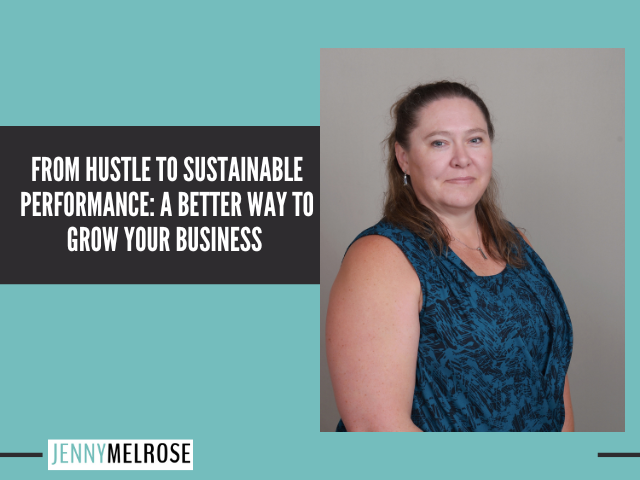
Move from burnout to sustainable performance in your business with insights from Deidre Gestrin. This conversation covers a better way to grow your business while protecting your energy, focus, and long-term success without relying on hustle culture.
501: From Hustle to Sustainable Performance: A Better Way to Grow Your Business with Deidre Gestrin
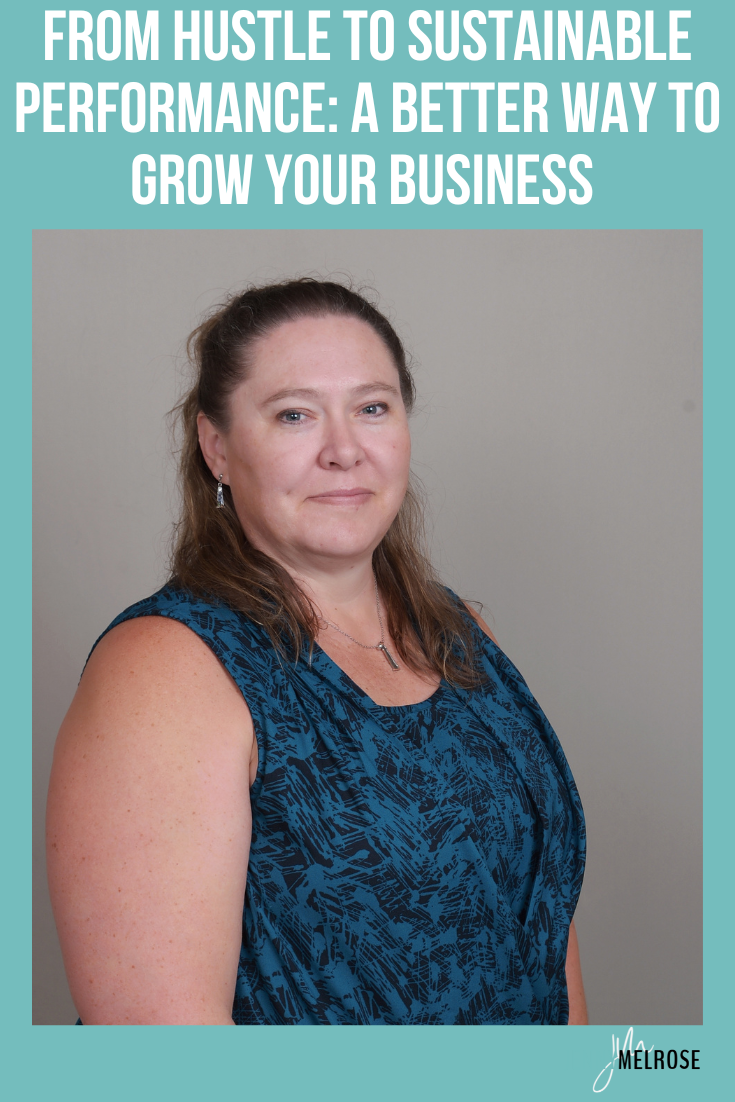
Deidre Gestrin is the founder of Abundant Wellness Essentials, where she helps professionals and organizations prevent burnout, restore energy, and create sustainable success. Through coaching, consulting, training, and leadership development, she equips individuals and teams with practical strategies that support long term wellness and performance.
Her work focuses on two key areas. First, she helps professionals stay connected to the work they feel called to do without sacrificing their health, well being, or personal lives in the process.
Second, she partners with organizations to improve workforce wellness, strengthen employee retention, and build systems that are both effective and sustainable over time.
Drawing from her experience as a licensed counselor, leader, and burnout recovery expert, Deidre combines practical systems with a deep understanding of the human side of work. Her approach centers on helping people create simple, sustainable habits that support both personal fulfillment and professional success.
When you hear the term sustainable performance, what does it actually mean to you in the context of business?
Sustainable performance is about more than simply creating systems. It is about creating systems that feel doable and can be maintained over time.
Deidre believes many business owners overcomplicate things unnecessarily. Instead, she advocates for keeping things simple and manageable. The goal is not to build systems that look impressive on paper, but systems that people can realistically sustain.
She also points out that sustainable performance is not only about the business itself. It is about the person behind the business.
Do you have the energy to sustain what you are building? Do you have the desire to stay committed for the long haul? Those two pieces go hand in hand.
Without the energy and motivation to continue, even the best systems eventually break down.
Sustainable performance comes from respecting the humanness behind the business and creating an approach that supports long term success.
Most entrepreneurs started their businesses for a reason. They navigate the constant ups and downs, changing algorithms, and endless marketing because they care deeply about what they do.
Remembering the person behind the business is what makes sustainability possible.
Many entrepreneurs start with hustle as the default. At what point does hustle start becoming harmful instead of helpful?
Hustle starts becoming harmful when it pushes people beyond what they can realistically sustain.
One factor is the constant attempt to multitask. While many people pride themselves on multitasking, Deidre notes that most of us are simply switching rapidly between tasks.
The more responsibilities we try to juggle at once, the more overwhelmed and exhausted we become.
Another warning sign is when the business begins controlling your schedule rather than your life guiding your business. When work starts taking over every available space, balance begins to disappear.
She also believes there is a deeper issue beneath the hustle culture mindset. The more focused people become on doing, producing, and keeping up, the more disconnected they become from what is happening inside themselves.
When attention is constantly directed outward, it becomes difficult to recognize stress, fatigue, and other warning signs.
Society often tells entrepreneurs that if they are not keeping up, they are falling behind. But that pressure can pull them away from the awareness they need to stay healthy and grounded.
That disconnect is often where the real problems begin. Slowing down and reconnecting with what is happening internally becomes essential before burnout takes hold.
What are some of the early signs that someone is operating in an unsustainable way in their business?
One of the first signs is increased irritation and frustration. It is not just work tasks that become annoying.
It is the extra emails, the interruptions, and even simple questions from other people. Small things start feeling much heavier than they normally would.
Feeling constantly tired is another common indicator.
But one of the biggest warning signs is when work never leaves your mind. If you are unable to turn off thoughts about work, even during personal time, it may be a sign that you are heading toward burnout.
Another signal is treating everything like an emergency.
The deeper people get into hustle mode, the more likely they are to respond to every request, task, or problem as if it is urgent. That constant state of urgency creates unnecessary stress and pressure.
Deidre also encourages people to look at their daily grounding routines. For her, that means spending time each morning in devotional reflection. When that routine disappears, it is usually a sign that something is out of balance.
Jenny shares that exercise serves a similar purpose in her own life. She also points to the importance of boundaries. If work continues occupying your thoughts after hours, it often means the boundary between work and personal life has started to erode.
This becomes especially challenging during seasons when children are home more often or routines are disrupted. Frustration can build quickly when boundaries are not clearly defined.
Deidre agrees and emphasizes that boundaries are not just about other people. While it is easy to blame others for crossing boundaries, many times it is our own choices that cause them to disappear.
Maintaining boundaries with ourselves is just as important as maintaining them with everyone else.
Why do you think high-achieving entrepreneurs struggle to slow down even when they know they’re heading toward burnout?
High achievers often tie their identity to their results. When performance and productivity become the foundation of self esteem and confidence, slowing down can feel lethreatening.
If people are not producing, achieving, or maintaining a high level of output, they may struggle to separate who they are from what they accomplish.
People pleasing is another common factor. Many high achievers become the person who always says yes.
Deidre shares that this was a significant part of her own story. As a licensed counselor and manager, she experienced burnout three separate times.
During the most severe period, she was working around the clock, often going home only long enough to let her dog out before returning to work.
Looking back, she realized that her burnout was not caused by a single factor. The organization played a role, but so did her own inability to set boundaries.
Underneath the constant yes was a fear of missing out and a fear that others would no longer see her as reliable if she started saying no.
Many high achievers face similar struggles. Their identity becomes tied to outcomes, while people pleasing creates a fear of disappointing others.
Together, those patterns make it incredibly difficult to slow down, even when burnout is clearly approaching.
Jenny has seen these same patterns show up not only in clients but also in friends and colleagues who continually push themselves beyond healthy limits.
How does sustainable performance change the way someone approaches productivity day to day?
Sustainable performance creates clarity. Instead of starting each day feeling overwhelmed and unsure where to begin, it allows people to approach their work with intention and focus.
Deidre shares that she still relies heavily on a paper planner alongside her digital calendar.
The purpose is not simply organization. It is prioritization. By deciding ahead of time what needs attention, she eliminates the daily scramble of figuring out what to work on next.
This clarity helps reduce overwhelm. Rather than looking at an endless list of responsibilities, there is a clear path forward.
Sustainable systems create a sense of calm because the priorities have already been established.
There is also a mindset shift involved. Many entrepreneurs believe they need to hustle harder in order to accomplish more.
What Deidre discovered through experience was the opposite. Once she began setting boundaries, she found herself accomplishing more while working less.
Jenny points out that many business owners feel trapped in a constant cycle of putting out fires.
They may be working on an important task when a Teams message pops up, immediately pulling their attention away. The urge to respond often comes from the same people pleasing tendencies that contribute to burnout.
Deidre explains that the solution begins with defining what is truly urgent.
Teams need clear expectations about what constitutes a crisis and what can reasonably wait. Once those definitions are established, business owners must follow through with boundaries.
A message appearing on a screen does not automatically require an immediate response. If someone is in the middle of focused work, most situations can wait a few minutes while that task is completed.
The expectation of instant responses has become increasingly common, particularly in the years following the shift toward online work, but slowing down is often more productive than reacting immediately.
Another common concern is the fear of forgetting if something is not addressed right away.
Deidre recommends being intentional with notifications.
Not every message needs a sound alert. Not every platform needs to remain open all day. In many cases, simply glancing at a notification without opening it is enough to determine whether it can wait.
She shares that when she worked for a telehealth company, she turned off sound notifications on her phone while still allowing banners to appear. That gave her enough information to decide whether something required immediate attention without pulling her completely out of her current task.
The goal is to create systems that support focus rather than constantly interrupt it.
Jenny compares this to how she manages email. Instead of checking it continuously, she reviews it at scheduled times throughout the day. This allows her to stay focused without feeling compelled to respond to every notification the moment it arrives.
Deidre agrees that scheduling communication checks is one of the simplest and most effective strategies. Many organizations already encourage employees to check email only a few times each day rather than keeping it open constantly.
The key is consistency. Set the schedule, communicate expectations, and hold yourself accountable to the boundaries you have established.
For true emergencies, separate systems can be created.
Deidre shares an example from her time managing a twenty four hour crisis line. Staff knew that if they genuinely needed immediate assistance, they were instructed to call her twice in a row because she might miss the first call. That system clearly separated urgent situations from routine communication.
Ultimately, sustainable performance comes down to understanding how you operate best and creating systems that support that reality.
Different situations require different processes, but the goal remains the same: protect your focus, reduce unnecessary interruptions, and create a way of working that can be sustained long term.
How can business owners categorize and prioritize their work so they can stay focused without constantly switching tasks and sacrificing results?
Deidre believes that most business owners have far fewer true emergencies than they think they do. In fact, she estimates that 90 percent of business owners rarely encounter situations that genuinely require immediate attention.
A true crisis is something that would completely stop the business from moving forward.
For example, if your technology fails right before a live training or presentation, that would require you to drop everything and focus on fixing it. Beyond situations like that, very few tasks belong in the crisis category.
Responding to social media messages, answering emails, or reviewing collaboration requests may feel important, but they are not emergencies. Most are not even urgent.
Instead, Deidre encourages business owners to stay grounded in their long term goals and priorities. She points back to the importance of having a ninety day plan and a clear focus.
For example, if the primary objective for the next two months is updating a website, then that becomes the priority. Content creation and audience nurturing may continue in the background, but the focus remains on moving that larger project forward.
The key is learning to distinguish between what feels urgent and what is actually important. When priorities are clear and systems are working well, very little should require an immediate response.
Jenny points out that one of the most common objections she hears is that creating systems requires stopping current work in order to put those systems into place.
How can entrepreneurs grow their business without constantly adding more to their plate?
The answer, according to Deidre, is simplicity.
Many overwhelmed entrepreneurs come looking for a complete roadmap filled with solutions. They want a detailed plan that will fix everything at once.
Instead, she takes the opposite approach. Rather than changing everything, she encourages clients to choose just two things to focus on.
When someone is exhausted, overwhelmed, and questioning whether they can keep going, adding more tasks is not the solution.
Instead, they identify two specific changes and commit to working on only those changes for the next two weeks. Everything else remains exactly as it is.
Deidre admits she often gets pushback on this approach. People want faster results and bigger action plans. But she encourages them to trust the process.
After two weeks of focused effort, those changes begin to feel natural. Then they can move on to the next set of improvements.
Before long, a month has passed, several systems have been improved, and the business feels noticeably lighter and easier to manage.
Jenny reflects on watching this process firsthand while Deidre worked on updating her website.
Rather than trying to overhaul everything at once, the work was broken down into manageable pieces. Page by page, the messaging became clearer, the stories became stronger, and the site evolved into something that better connected with potential clients.
The transformation did not happen overnight, but it happened consistently.
How do you help clients or entrepreneurs redefine success so it’s not just tied to revenue or output?
For Deidre, success starts with taking a holistic view of life.
One of the biggest lessons she learned during her recovery from severe burnout was that success cannot be measured solely by work, productivity, or revenue. When those become the only markers of achievement, people lose sight of the bigger picture.
Instead, she encourages people to ask a different question: Do you have what you want, and are you happy?
That question extends into every area of life.
- Physically, are you healthy enough to function and enjoy your life?
- Family wise, does your life reflect the relationships and priorities that matter most?
- Mentally and emotionally, have you done the work to heal and develop a healthy mindset?
- Spiritually, are you living in alignment with your beliefs and purpose?
Success comes from the combination of all of those areas working together.
She shares a personal example involving her father. Several years ago, he lost an election and struggled significantly afterward.
Watching that experience unfold reinforced an important lesson. When identity and self worth become completely tied to work or achievement, setbacks can become devastating.
Success has to be bigger than a job title, a business milestone, or a revenue number.
When people build a life that aligns with their values, priorities, relationships, health, and purpose, they create a version of success that can withstand the inevitable ups and downs of business.
Professional Burnout Self-Assessment
The Professional Burnout Self Assessment is a quick, 10 question assessment designed to help you determine whether you are simply tired, experiencing elevated stress, or heading toward burnout.
By evaluating factors such as your energy levels, exhaustion, relationship with work, and overall well being, the assessment provides clarity on where you currently fall on the burnout spectrum.
Rather than offering another productivity strategy, this assessment helps you identify the early warning signs before burnout becomes overwhelming.
Based on your results, you’ll gain insight into what burnout may be costing you and receive resources and next steps tailored to your current stage, helping you create sustainable change before reaching a breaking point.
The goal is not just to recognize burnout, but to catch it early enough to prevent it from taking over your life and work.
Action Steps:
- If you liked this episode of Influencer Entrepreneurs, please subscribe and leave a fabulous review!
- Join the conversation on Instagram by tagging Jenny when you’re listening to the podcast. She’ll send you a personal message whenever you tag her.