Learn how former therapist Kate Walker scaled her business online to 7 figures. Discover the systems, mindset shifts, and strategies she used to grow beyond 1:1 work.
How to Scale Your Business Online: A Therapist’s Journey to 7 Figures with Kate Walker
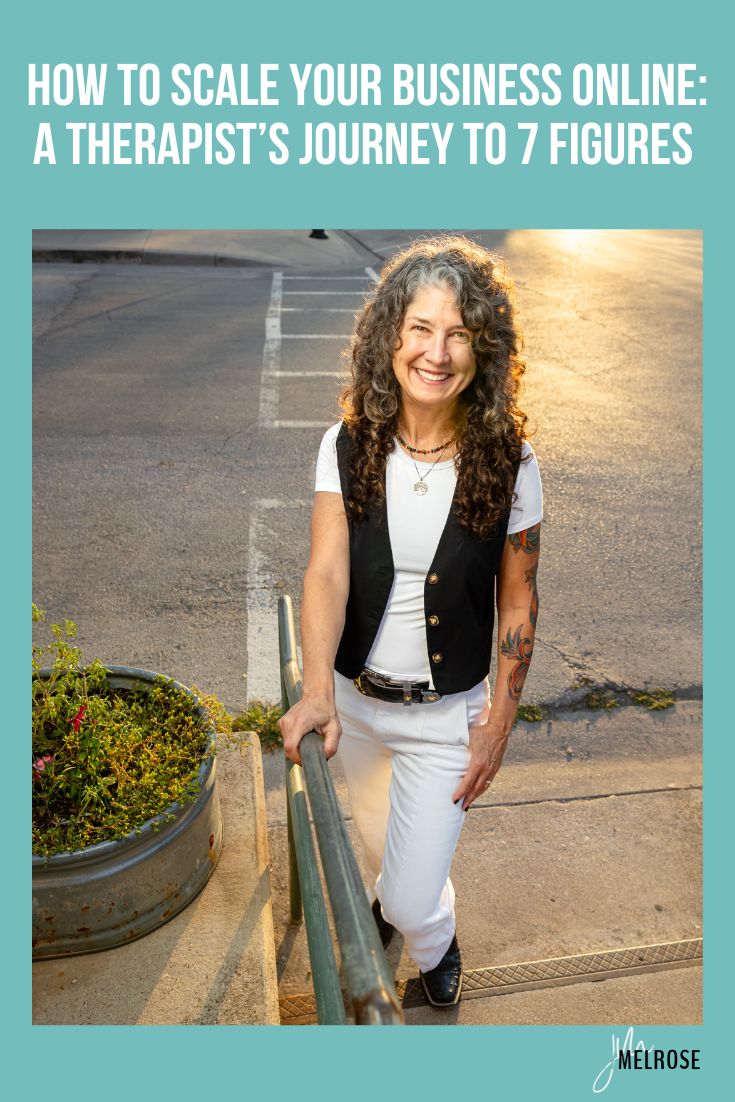
Kate Walker is a marriage and family therapist at Achieve Balance since 2007. She has taken those skills and created a thriving business, Kate Walker Training.
She creates and sells the courses people need to take in Texas in order to become a clinical supervisor for LPCs or LMFTs.
She has a podcast for grad students , mental health professionals, and anybody out there who is interested in mental health called Badass Therapists Building Practices That Thrive. You can also find her on YouTube.
She publishes a new episode every week related to business and mental health providers. She talks about supervision, how to you know, structure a first session, and how to structure a 10-minute consultation so that your potential client books a first session or becomes your raving fan.
If you are a Texas supervisor, she has the Texas Supervisor Coalition, the ultimate resource for connecting LPC Associates, LMFT Associates, and Social Workers with qualified clinical supervisors across Texas.
When did you first realize that 1:1 client work might not be the only or most scalable way to grow your business?
Kate’s realization came from both ends of the business spectrum. Early on, during economic downturns like the recession around 2009 and 2010, the instability of relying solely on one to one client work became clear.
At the opposite end, when her practice was thriving, she noticed another limitation. Even with full books, there was a hard ceiling.
She was maxed out on time and energy. In an attempt to solve that, she grew her practice by adding more people and more moving parts, believing that expansion was the answer.
Instead, she found herself still locked in, with less time, less peace of mind, and a bottom line that did not reflect the added complexity. At several different plateaus, it became obvious that this model was not working for her long term.
What motivated you to explore online courses as a new business model?
Kate’s move into courses was rooted in both opportunity and timing. She had extensive training gifted to her by her mentor, Dr. Judy Detrude, and together they began offering courses in person in The Woodlands, Texas, starting in 2007.
As licensing laws evolved, they adapted by offering partially online courses. When the law changed again in 2019, Kate was encouraged during a business transition to put a full 40 hour training online.
She did, becoming one of the first to offer a fully online 40 hour training for LPCs and LMFTs in Texas, possibly even nationwide.
This was before COVID, before online training was widely accepted. When the pandemic hit, the timing proved to be perfect, as online learning quickly became the only viable option.
How did you market your courses initially, and what strategies ended up driving the most sales?
Kate’s early marketing efforts were very different from what she uses today. She recalls selling ads on t shirts, printing trifold brochures, and placing them anywhere she could, even at places like Chuck E. Cheese’s.
At the time, she believed that if something cost a lot, it must be effective. While she had some awareness of blogging and SEO, the real shift happened later when she began working more strategically and understanding that these tools were a means to an end, not the end itself.
As digital marketing evolved, and especially with the rise of AI and changes in SEO, the focus shifted toward building trust and keeping people engaged. Kate emphasizes that growth required a willingness to keep learning and adapting as a business owner.
What strategies are you using online right now?
Today, Kate takes a very focused approach. Rather than traditional keyword research, she monitors the search terms people are already using to find her.
Because her work is highly niche, those terms remain relatively consistent. She creates content directly around them.
AI has become part of that process as well, helping her identify gaps in content, develop cornerstone pieces, and build a strong internal web of articles.
Her podcast also plays a major role in visibility, with tens of thousands of downloads bringing new people into her world.
A cornerstone of her current strategy is her opt in system. Instead of a generic newsletter sign up, every entry point leads to a freebie.
Whether someone lands on a blog post or a podcast episode, they are directed to a bonus page that always offers something valuable.
That bonus changes monthly, but the link stays the same. The free content lives inside her platform, collects email addresses automatically, and feeds into a fully built funnel that welcomes, tags, and nurtures subscribers.
Giving away free resources has become a deliberate positioning strategy. It establishes expertise while supporting high value offerings. Even older products that no longer sell are being repurposed into free resources and integrated into her funnel.
Jenny highlights how these freebies go beyond simple guides. By inviting people into workshops and webinars, Kate allows them to see her teach, hear her voice, and experience her expertise firsthand. This accelerates trust far more effectively than a single downloadable guide.
Kate reinforces that trust is essential, especially in fields like counseling. Whether through blogs, podcasts, workshops, or video, people need to watch, listen, and read before they decide.
Showing up consistently across platforms helps potential clients and students know if she is the right fit for them.
What role did your audience, email list, or social media play in scaling your business?
Kate is very honest about the fact that she is still working to fully understand her numbers, and she sees that as an ongoing goal.
Even so, she has noticed clear correlations between audience growth and business growth. As her Facebook group expanded to around 5,000 people, podcast listeners increased, search traffic rose in Google Search Console, and email subscribers continued to grow, her sales increased as well.
She sees consistent year over year growth, often around 30 percent compared to the same month the previous year.
While it can still feel unclear where to push hardest, she is intentional about not wasting time on platforms or strategies that do not align with how she wants to work. She pays close attention to what is already working and tightens those levers rather than chasing every new trend.
Jenny points out that Kate often underestimates how much she actually does know. The way she tracks correlations between traffic, audience growth, and sales already puts her far ahead of many business owners.
Over time, her email list has grown significantly, largely because she is strategic about how people enter her world and how they are nurtured once they do.
How did you approach upsells, bundles, or additional offerings to increase revenue?
Upselling was initially one of the hardest areas for Kate, largely because her core offerings are already a significant investment for customers.
The first major shift was taking one product and intentionally turning it into three distinct offers.
To support a price increase, she focused on adding real value, which led to the creation of a membership. That membership came together more easily than expected because she already had a large library of content that could live behind a paywall.
Once the membership existed, she was able to offer different levels, including a one year membership and a lifetime option.
As she continued creating free webinars and educational content, her confidence in the ongoing value of the membership grew, making it easier to position it as an upsell.
Customers are given multiple opportunities to add the membership during checkout, with discounted offers presented through her platform and follow up pages.
Kate also built in retention strategies. When someone cancels a membership, there is a process in place to personally reach out with a deeper discount, similar to how subscription companies try to retain customers.
Over time, upselling has become easier as she has gathered testimonials, Google reviews, and direct feedback that reinforce the value of what she offers.
She actively collects reviews after webinars, directing satisfied participants to leave five star reviews while routing constructive feedback into surveys that help improve future offerings.
What metrics or milestones let you know you were successfully scaling your business?
One of the clearest indicators of scaling for Kate is her move toward offering courses nationwide. This step comes with significant complexity, as each state has its own licensing laws and requirements.
The process has been challenging and, at times, intimidating, but it is also a clear signal of growth beyond a local or state based model.
Kate approaches this expansion carefully, always weighing best and worst case scenarios to avoid risking the stability of her business. Even in the worst case, she sees the effort as worthwhile.
Increased national exposure could lead to more speaking opportunities, greater brand recognition, and stronger enrollment in her Texas based courses. From her perspective, the work being done now supports long term growth regardless of the outcome.
Jenny notes that this uncomfortable, slightly scary phase is often where the biggest growth happens.
Kate has the expertise, systems, and standard operating procedures in place, and she consistently reviews metrics and makes adjustments to improve.
Expanding nationally, with state specific requirements in mind, is not only viable but a natural next step in scaling a well built and sustainable business model.
How did this change affect your lifestyle, freedom, and impact?
For Kate, shifting into scalable online courses fundamentally changed the way she lives and works.
She has a full life outside of business with hobbies she loves, a recently retired husband, and a growing family that now includes being a grandmother. Her children live in different parts of Texas and beyond, and having a business that continues to generate income without requiring her constant presence has given her a level of freedom she always hoped for.
She talks about the joy of waking up and seeing sales come in overnight, not just because of the income, but because the work aligns deeply with her values.
The courses she sells are things she truly believes in and feels good about putting into the world. That matters to her. The ability to make money while sleeping is powerful, but the fact that the work itself has integrity makes it even better.
That freedom became especially real when her daughter went into labor. Kate was able to drop everything and be there for an entire week without worrying about clients, schedules, or whether the business would stall.
With systems, SOPs, trained team members, and strong communication tools in place, the business continued to function smoothly. She is clear that this kind of flexibility would not have been possible if one to one client work were still her sole source of income or if she were managing a traditional practice.
This shift allowed her to create the life she always wanted, one with time, peace of mind, and meaningful impact.
What’s the first step someone should take if they want to scale their business with online courses?
Kate does not hesitate here. She believes the first step is learning from someone who already understands how to build the systems, particularly around opt-ins and email marketing.
She shares how, early on, she approached this like a researcher, pausing training videos, taking detailed notes, marking timestamps, and methodically building the pieces even before she fully understood how they all worked together.
Over time, through coaching and mastermind support, those pieces began to make sense as part of a larger strategy.
Being in a mastermind environment played a big role. At first, the language and concepts felt unfamiliar, but the supportive nature of the group made it safe to learn.
She emphasizes that no one is made to feel foolish for not knowing something. It takes time, but the information is there, and with guidance, it becomes actionable.
Both Kate and Jenny agree that one of the most critical early steps in scaling was creating an opt-in and intentionally growing an email list.
Before that, Kate describes blogging as putting in a lot of effort without truly knowing what was working. She could sense correlations, more blogs seemed to bring more clients, but it was vague and hard to track.
Once the opt-in strategy was in place, everything became clearer. Goals became measurable. When she set an intention to grow course sales by 30 percent, the path forward was obvious. She needed more people on her email list.
That clarity led to monthly free webinars, which became a turning point. Suddenly, she could see exactly what content resonated.
Some topics attracted far more people than others, and that data informed what she created next. It helped her understand her audience, refine her messaging, and still guide people toward her core courses. Instead of guessing, she had real feedback and real numbers.
Throughout this process, patience was essential. Kate talks about the discipline required to stop tweaking, stop jumping to the next shiny idea, and let the system do its job. She remembers feeling like nothing was happening for months, only to see it suddenly work.
Her advice is simple but hard to follow. Build the thing, stay with it, resist the urge to constantly change it, and let it grow. Then, once it does, enjoy the freedom it creates and go live your life.
Action Steps:
- If you liked this episode of Influencer Entrepreneurs, please subscribe and leave a fabulous review!
- Join the conversation on Instagram by tagging Jenny when you’re listening to the podcast. She’ll send you a personal message whenever you tag her.