
Wondering if your free content is hurting your sales? Jana Osofsky explains how to give massive value while still setting up a clear path to paid offers.
491: How to Give Massive Value & Still Set Up a Sale with Jana Osofsky
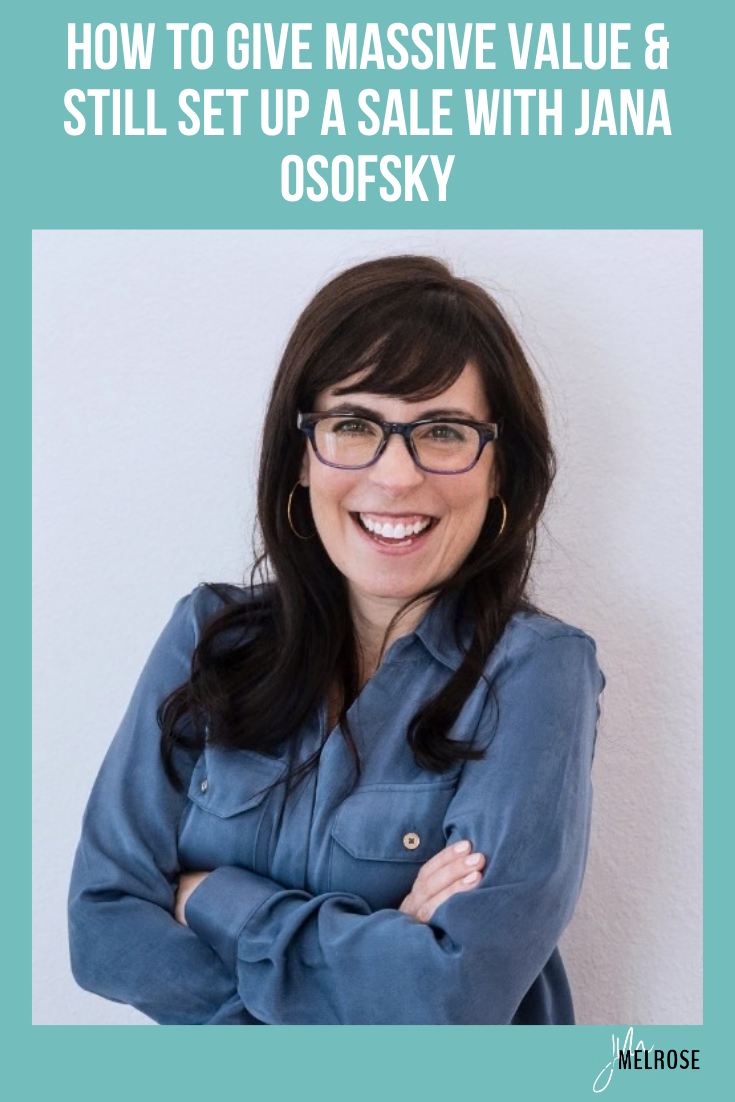
Jana Osofsky, often called Jana O, is a blog and content marketing strategist who helps service based businesses create content that actually converts. With nearly a decade of experience in the online space, including eight years specializing in Pinterest marketing, she now focuses on helping clients build high converting blogs.
Her company is Jano O Media. Her work centers on what she calls a capsule blog, a deliberately small and strategic collection of 12 to 20 blog posts designed around what an audience needs to feel ready to buy.
Jana primarily works with service providers, especially in the health and wellness space, teaching them how to create thought leadership content that builds trust, creates demand, and can be used repeatedly to attract and convert clients over time.
When People Hear “Give Massive Value,” What Do They Usually Get Wrong?
Jana shares that there is a strong belief in the online space that content needs to give lots and lots of value. While that is not entirely wrong, it is often misunderstood.
The first mistake is focusing only on what to teach. Many people approach their content by asking what their audience wants to learn or what they, as the expert, can share that would be helpful. While that is part of it, it misses a more important question.
What often gets overlooked is what the audience actually needs to hear, learn, and understand in order to feel ready to buy.
Instead of only thinking about what to give, content should also be shaped around helping people understand the offer and see how it fits into their life. Whether the offer is coaching, therapy, a package, or a digital product, the goal is not just to educate but to create clarity and readiness for the next step.
She points out that many people are not thinking about how their content connects to their offer. They are focused on teaching, but not on helping the audience understand why they would want to work with them.
The second mistake shows up most often with long form content. People feel pressure to fully solve a problem from beginning to end. There is often a fear that if they give too much away, the audience will feel like they no longer need to invest.
Because of that, long form content can feel overwhelming to create.
Instead of trying to solve the entire problem, the goal is to explore it and guide the audience forward. Content should put someone on the path toward a solution, not hand them everything at once.
Jana emphasizes that it is not about solving the problem quickly. It is about helping people move toward the solution in a way that builds trust and understanding over time.
This is something she sees many coaches, therapists, and health and wellness professionals begin to understand well. When content focuses on guiding rather than completing, it creates both value and momentum.
What’s the real purpose of free content in a business model?
Free content can take many forms, from blog posts to social media to lead magnets, but its purpose goes far beyond simply “giving value.” At its core, it is meant to build trust, demonstrate how you think, and create desire for your paid offer.
Jana explains that free content is not just about showing expertise. While it does help position someone as knowledgeable, it also plays a critical role in preparing the audience to invest.
It helps people understand not only what you know, but how you approach problems and how you can guide them toward a solution. That combination builds what she describes as buyer readiness, where someone begins to feel confident that taking the next step with a paid offer makes sense.
Jenny expands on this by emphasizing the importance of alignment, especially when it comes to lead magnets or opt-ins.
Free content should not exist in isolation. It should clearly connect to the next step in the customer journey. One of the biggest gaps people have is creating content that feels helpful but does not naturally lead into their offer.
When done well, free content becomes the beginning of a pathway rather than a standalone resource.
Jana describes this process as reverse engineering. Instead of only asking what would be helpful or educational, content should also address what the audience needs to believe, understand, or experience in order to feel ready to buy.
This means shifting from simply teaching to also guiding their thinking and helping them see why the paid solution is the right next step.
She shares an example of a fertility coach who creates content around nutrition and its role in preparing the body for pregnancy.
A blog post might introduce key ideas and perspectives, while a lead magnet could help the reader implement those ideas through something like a worksheet, guided exercise, or practical resource. This gives the audience a small but meaningful win and allows them to experience the coach’s approach firsthand.
That small transformation is key. It is not about solving the entire problem, but about helping someone take a step forward while also showing them what deeper support could look like.
The goal is not just for someone to think, “this is helpful,” but also, “I understand what she offers and how she could help me further.”
Free content also plays a strategic role in visibility and growth. Jana highlights the importance of building an email list as part of a broader visibility strategy.
While lead magnets are a powerful tool for this, she also notes that well-structured blog content can sometimes lead directly to conversions. When written intentionally, blog posts can prompt readers to book calls, apply to work together, or purchase offers without needing multiple steps in between.
Ultimately, free content is not just about generosity or information. It is about connection, clarity, and momentum. It builds trust, creates understanding, and gently moves people toward the decision to work with you.
Why do so many entrepreneurs feel guilty holding something back?
Jana explains that this feeling is often rooted in people pleasing, especially for women. There is a tendency to believe that being generous means giving as much information as possible, because somewhere along the way, it was learned that information is what people value most.
So instead of questioning that instinct, many entrepreneurs try to overdeliver in a way that feels like they are proving their worth. However, she points out that value is not just about how much information is shared.
When stepping back and really thinking about the audience, it becomes clear that people are not only looking for tips, strategies, or step by step instructions. They also deeply value learning how someone thinks. They want new perspectives, new ways to approach problems, and insights that help them see things differently.
Jana shares that inside her framework, while there is still space for education and teaching, many people lean too heavily on that alone.
What is often missing is what she calls belief shifting content. This includes addressing myths, mistakes, and objections, not just about an offer, but about the topic as a whole.
This type of content helps people rethink their assumptions and move closer to real change.
In today’s world, where information is everywhere and easily accessible, simply giving more of it does not stand out.
What stands out is lived experience, perspective, and the ability to guide someone into a new way of thinking. These are also the exact elements that help someone feel ready to buy, not just impressed by expertise.
Jenny builds on this by explaining that the shift often needs to move from focusing on how to do something to answering why it matters and what it really is.
When content speaks to the deeper reasons behind a decision, it becomes much easier for someone to justify taking action. This is especially important when people feel hesitant about spending money on themselves.
Jana gives a practical example of this. For someone in a consumer focused business, like a coach or therapist, a potential client might hesitate to invest because they are thinking about other priorities like their children’s activities or home expenses.
Instead of only teaching tactics, content can help reframe that decision. Investing in personal growth can be positioned as something that benefits the entire family, just like those other expenses. It can make someone a better parent, partner, or role model.
This kind of belief shift changes the way the investment is perceived. It no longer feels like something selfish or optional, but something meaningful and valuable on a deeper level.
Ultimately, the guilt around holding back comes from the desire to please and to be seen as helpful.
But giving value does not mean giving everything away. It means giving the right things. When content helps people think differently, it not only serves them better, it also naturally leads them toward the next step.
What’s a simple framework for filtering content ideas through a sales lens?
Jana shares that one of the most effective ways to make content more conversion focused is to be intentional about how it is structured from the very beginning.
Instead of simply asking what should be taught, the goal is to think about how each piece of content can naturally lead someone toward understanding and eventually buying the offer.
Inside her program, she teaches nine types of content, each with its own structure. For content that focuses on helping people explore a problem and move toward a solution, there is a clear flow that can be followed.
It begins with a strong hook and introduction, followed by a section that helps the reader feel seen and understood. This often includes empathy and context, reminding them that their struggle is not just personal, but often influenced by larger cultural or societal factors.
From there, the main portion of the content centers around three strategies. This is where the shift toward a sales lens becomes important.
Instead of simply listing general tips, one strategy can be something practical and immediately actionable. But the other two should directly connect to what is done inside the offer.
Jana explains that for those two strategies, the focus should be on the what and the why. What the strategy is and why it matters.
Then, when it comes to the how, the explanation shifts. Instead of teaching how to go implement it independently, the content shows how this is supported inside the offer.
This creates a natural integration where the offer is not introduced at the very end as an afterthought. Instead, it is woven throughout the content in a way that helps the reader understand how support actually works.
It becomes less about a sudden call to action and more about building clarity and connection over the course of the content.
The third strategy can still include a traditional how to approach, such as a worksheet, a list, or something immediately useful. There is no need to hold back completely from teaching. The key is balance.
Jenny adds that this approach also creates space for storytelling. By showing how strategies work through real client experiences, it becomes easier for people to see themselves in the process.
This is especially important in a time where so much content feels generic. Real examples and lived experiences help build trust and make the content feel both personal and credible.
Ultimately, this framework allows content to remain valuable while also being intentional. It guides the reader, builds understanding, and naturally positions the offer as the next step.
What does a healthy value-to-sale ratio look like in real life?
Jana explains that one of the biggest misconceptions is thinking of value and selling as two separate things. Instead of treating them like silos, she encourages integrating both at the same time within the same content.
Rather than asking how much should be value and how much should be sales, it is more helpful to think about the types of content being created.
Some content will naturally be more educational and focused on helping people feel seen, understood, and supported in their problems. Other content will lean more toward showcasing case studies, frameworks, and examples that help someone see how the offer works and why it is effective.
Inside her framework, this balance is reflected in the way content is created. About half leans more toward education and belief shifting, while the other half is more conversion oriented.
However, Jana emphasizes that this does not mean separating them by day or by type. It is not about deciding that certain days are for nurturing and other days are for selling.
Instead, the goal is to blend them together within each piece of content. That means consistently weaving in the what, the why, and a mix of how to approach something along with how support is provided inside the offer.
When done well, the audience is learning and being guided at the same time, without feeling like they are being switched from teaching mode to selling mode.
She describes this more like a symphony than separate parts. It is not about isolating each element, but about how everything works together as a whole. When people experience content this way, it feels natural, cohesive, and aligned rather than segmented or overly strategic.
This approach allows content to both serve and convert without forcing a rigid ratio, creating a more seamless experience for the audience.
6 Secrets to Signing Clients
6 Secrets to Signing Clients is Jana’s training designed to show service providers how to turn their content into a consistent client-generating system without constantly creating something new.
At the center of the training is her capsule blog library strategy, a focused collection of 12 to 20 blog posts built around exactly what an audience needs to hear, understand, and believe before they are ready to buy. Instead of chasing endless new content ideas, this approach helps identify the key messages that matter most and use them repeatedly in a strategic way.
Inside the training, she walks through the six essential elements needed to build this kind of content system, how to structure the library, and how to leverage it over and over again through repurposing, sales conversations, and client nurturing.
The emphasis is not just on saving time, although it does that, but on using repetition as a powerful sales strategy that builds trust and shortens the path from content to clients.
It also highlights what types of content are being ignored right now versus what actually moves people to take action, how to create effective content even with a small audience, and how to step off the constant social media treadmill while still increasing sales.
The result is a simpler, more intentional way to create content that works harder, builds demand, and helps convert readers into clients more efficiently.
Action Steps:
- If you liked this episode of Influencer Entrepreneurs, please subscribe and leave a fabulous review!
- Join the conversation on Instagram by tagging Jenny when you’re listening to the podcast. She’ll send you a personal message whenever you tag her.