Discover how play therapist Lynn McLean transitioned from 1:1 sessions to passive income courses, creating scalable revenue while expanding her impact. Learn the strategies and mindset shifts behind her growth.
IE 481: From 1:1 Sessions to Passive Income Courses: A Play Therapist’s Growth Story with Lynn McLean
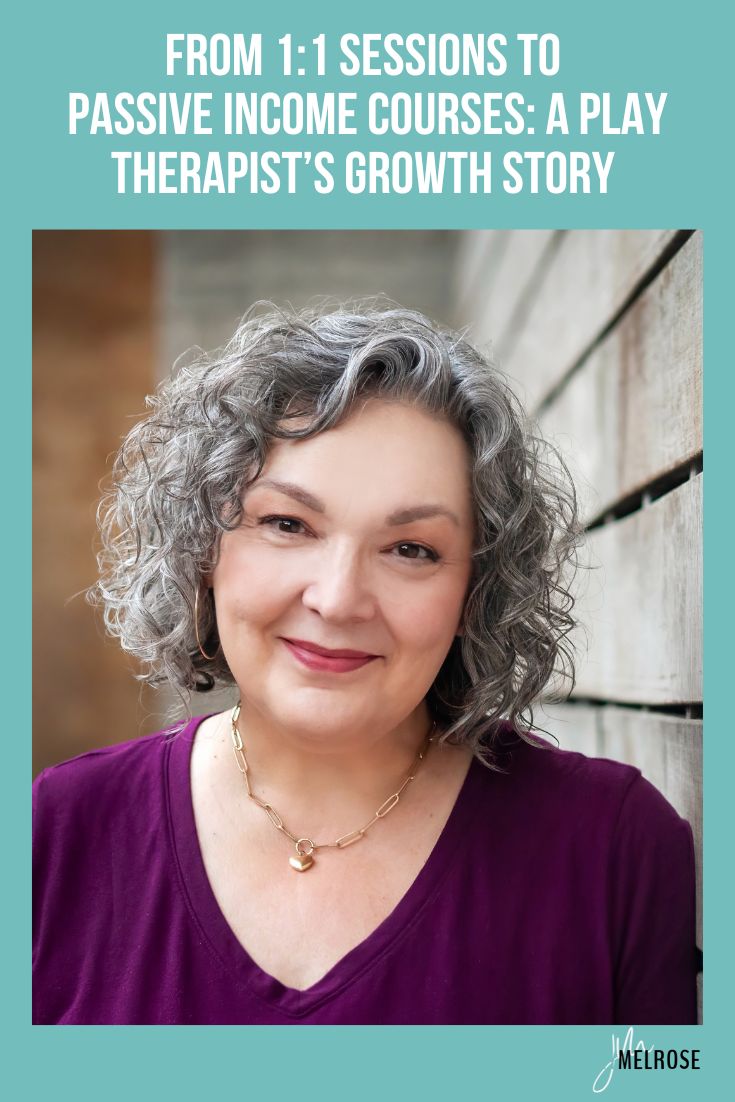
Lynn McLean is a child and family therapist. She is a licensed clinical social worker and supervisor.
She decided at the outset of her career to really focus on kids and parents so she is a registered play therapist and supervisor. Her private practice is in Houston, Texas; Houston Family Therapy Associates.
Why did you begin creating courses?
Lynn has always loved teaching parents as much as she knows about how to interact with their kids in ways that truly work.
For years, she offered in person courses that were highly successful. Parents loved them, and the feedback was consistently positive.
When COVID hit, those in person courses had to move online. At first, everyone was fully on board. Virtual classes worked well during that season.
As life shifted back to business as usual, priorities changed. People were busier, spent less time wanting to be on a computer, and were less interested in returning to the office for classes.
Lynn still wanted parents to have access to the material, so she decided to put her courses online in a way that allowed people to access them when it was convenient.
This also became a great resource for her in person clients. She can recommend specific classes to parents, knowing they can complete them on their own time, without extra office visits, and at a more affordable price.
What made you start thinking about passive income courses in the first place?
Lynn does not point to one defining moment where the idea of passive income courses suddenly clicked.
Instead, it grew out of years of experience and a growing awareness of how much need exists beyond her local area. She realized that by making her material available online, she could serve people who were not even in Houston.
By spending focused time writing, recording, and promoting a course, she could reach far more people than she ever could through one on one sessions alone.
It required fewer hours over time while creating a much broader impact. This approach aligned with her passion for teaching and also allowed her to scale back her workload while still earning income.
She loves being in the room with her young clients and values the personal connection with parents, but passive income courses offer a way to reduce some of the physical and emotional wear and tear that comes with constant direct service.
It becomes a way to trade time for scalability while still delivering meaningful help.
Jenny adds that offering courses online allows them to impact many more people; making it a win for both the professional and the families they serve.
What fears or hesitations did you have about creating courses as a therapist?
One of Lynn’s biggest hesitations was letting go of direct, personal contact.
She deeply values being able to read parents’ reactions, notice when someone looks confused, and respond in real time. Even in virtual sessions, she relies on that feedback to guide conversations.
Putting information out without being directly in front of people felt like a risk.
Over time, she realized that while some connection is lost, something else is gained. Parents appreciate the convenience of being able to sit on their couch after work or use a lunch hour to move through material at their own pace.
The flexibility often outweighs the lack of live interaction.
Lynn also openly shares that imposter syndrome was a major stumbling block. She questioned whether she was qualified to put her information out into the world in that way. Ultimately, she decided that getting helpful material to parents mattered more than her own insecurities.
Jenny reinforces this by pointing out that holding back because of imposter syndrome can actually limit the help available to others. When someone has a real solution, pushing through that fear allows many more people to benefit.
Why did you begin creating courses?
Lynn has always loved teaching parents how to interact with their kids in ways that actually work.
Long before anything went online, she was teaching in person courses that were highly successful and well loved by both parents and families.
When COVID hit, those courses moved online out of necessity. At first, people were fully on board, but as life returned to normal, priorities shifted. Parents were busy again, tired of being on screens, and less interested in showing up live at a specific time.
Rather than letting the material disappear, Lynn realized she still wanted parents to have access to it.
Putting the courses online meant families could grab the information when it worked for them. It also became a valuable resource for her in person clients.
She could point parents to a class that reinforced what they were already working on, allowed them to move at their own pace, and removed the need for additional office visits.
Making the courses more affordable and flexible helped parents while also extending the reach of her work.
How long did it take from idea to launch?
The process was not quick or linear. Much of the early time was spent conceptualizing and learning new technology.
Lynn did not come into this with a strong technical background, so there was a steep learning curve. Recording the course, building the presentation, choosing a platform, and understanding how everything fit together took time.
From a practical standpoint, recording and setting up the course took around two to three months. When hesitation, anxiety, procrastination, and learning new systems are factored in, the entire process was closer to six months.
This also included creating an email opt in to help promote the course. Lynn is very honest that she was not someone who had an idea and launched immediately.
Jenny notes that considering Lynn was working full time in her therapy practice while building content and systems, six months is actually quite fast for many people.
What role did your email list or existing audience play in sales?
Seeing enrollments come through has been especially meaningful for Lynn.
Some buyers are people she already knew through therapy relationships or personal connections. Those existing relationships played a big role in early sales because trust was already established.
At the same time, it has been exciting to see completely new names sign up through the email opt in and later purchase a course.
This confirmed that people who would never have known her otherwise were finding the information and benefiting from it. It reinforced the idea that online courses can reach families who cannot access in person services.
Another unexpected benefit has been how well the courses support in person clients. Lynn now includes discounted access to her courses as part of the intake process.
Parents are encouraged to use the online material alongside therapy, which helps reinforce language, strategies, and consistency at home. This has allowed her to support families in a deeper and more comprehensive way than before.
Jenny shares from a parent perspective how powerful it is to be aligned with a therapist and understand the same language and techniques being used with a child.
How do you feel like those people are finding you?
Lynn believes many parents spend a lot of time on Facebook, where she actively promotes her work. She also has strong visibility through
Google searches related to parent coaching and education. In addition, she launched the Tantrum of the Week podcast, which gives parents insight into how she supports families and children.
Through the podcast and other platforms, Lynn shares practical play therapy skills in accessible ways. Parents do not need to be therapists to use these tools.
Simple changes in tone or strategy can make a real difference. By showing up consistently in places parents already are, she is able to connect with families who are actively looking for support.
What is your opt in that you offer right now? Is it a workshop or is it a guide?
Lynn currently offers a guide as her opt in. It is designed to explain why some popular parenting trends may not be working in certain homes and what parents can try instead.
With so much information available on platforms like TikTok and Instagram, it can be overwhelming to know how to tailor advice to a specific child.
The guide walks through several common trends, acknowledging that many of them are helpful while also offering additions or adjustments that make them more effective in real life.
It is practical, approachable, and focused on helping parents solve everyday problems, like getting a child ready for school on time.
Jenny explains that the guide works as a strong entry point. Parents may discover it through the podcast, then continue to be supported through emails, blog content, and ongoing resources.
Lynn’s goal is simple and consistent across all platforms. She wants to support parents in ways that help them better support their kids, using formats that fit naturally into their lives.
How do you feel that your clients or students benefit from having access to your courses at their own time when they need it?
Lynn is very aware of how stretched thin parents are right now. Between work, family responsibilities, and emotional overload, it can be hard for parents to absorb and retain information in the moment.
Having access to courses online allows parents to engage with the material when it actually fits into their lives.
Even though online courses are everywhere, parenting content is different because it is often needed most when emotions are running high.
One of the biggest benefits is lifetime access. Parents are not pressured to finish a course within a short window or worry that they wasted money if life got in the way. They can return to the material whenever they need a reminder.
They might revisit a specific tip about helping kids through transitions or go back to review how to reflect feelings more effectively. The content is intentionally evergreen, based on skills Lynn has used consistently for decades in her clinical work.
The courses also encourage parents to slow down and reflect.
The larger parenting course includes self help components that guide parents to clarify their goals, identify what they want their child to work toward, and recognize how they will know progress is happening.
Worksheets and structured exercises help parents dig in and apply what they are learning in meaningful ways that can actually change day to day family life.
Jenny highlights how valuable lifetime access is as children grow and move through different developmental stages. What works for a young child often needs to be revisited and adapted for a teenager.
Parenting is full of transitions, and parents need tools they can return to again and again. Having ongoing access allows families to reset, regulate, and reconnect as new challenges arise.
Lynn also points out that many of the skills taught are foundational and widely applicable. Reflecting feelings, for example, works with toddlers, teenagers, and even adults.
She shares a story of a parent who used the skill successfully in a workplace meeting. These tools grow with families over time, making the courses a long term resource rather than a one time solution.
What’s the first step a therapist should take if they’re considering passive income as courses?
The first step Lynn emphasizes is learning to speak clearly and confidently about what you bring to the table.
Therapists often underestimate how much knowledge and experience they truly have. Holding back because of self doubt does not serve current or future clients.
Recognizing your expertise and identifying where your passion lies is essential, since most therapists are driven by a desire to help and reach people.
She also encourages therapists to think about sustainability. Burnout is a real issue in the field, and creating courses can help reduce wear and tear while still providing income.
Passive income does not mean less impact. It can actually allow therapists to serve more people while protecting their own well being.
Another key step is learning how to reach a wider audience. Lynn knew how to connect with families in her therapy practice, but expanding beyond that required learning new skills like email marketing and online promotion.
Seeking professional expertise was crucial. She strongly advises against trying to do everything alone. Just as clients seek therapists for guidance, therapists can and should seek help in areas outside their expertise.
Jenny echoes this by highlighting the value of mastermind groups. These spaces provide accountability, shared knowledge, and diverse expertise in areas like email marketing, podcasting, SEO, and content creation.
Being surrounded by others with complementary skills helps therapists move forward faster and with more confidence.
For Lynn, accountability and asking for help made a huge difference. What took six months to create would have easily taken a year and a half if she had tried to figure everything out on her own.
Her advice is simple but powerful. Find people who can teach you, invest in support, and ask for help. Doing so not only saves time but also makes the entire process more sustainable and successful.
Tantrum of the Week Guide
It’s called Tantrum of the Week because there’s always a new one happening at your house. Click here to get the guide.
Action Steps:
- If you liked this episode of Influencer Entrepreneurs, please subscribe and leave a fabulous review!
- Join the conversation on Instagram by tagging Jenny when you’re listening to the podcast. She’ll send you a personal message whenever you tag her.