Learn the top SEO tips for 2026 to improve your Google rankings, grow your visibility, and stay ahead of algorithm changes.
IE 475: Proven SEO Tips to Improve Your Google Rankings in 2026 with Ty Kilgore
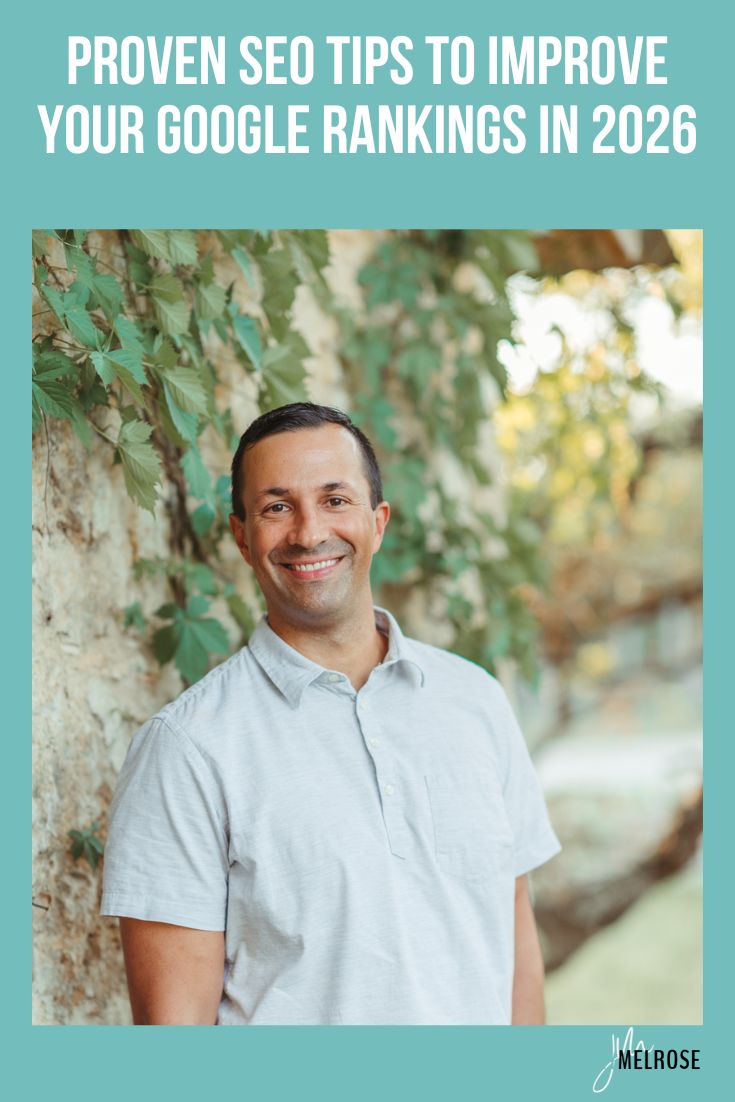
Ty Kilgore is the founder of a business called Everything Digital Marketing, which he started about seven years ago.
Before launching his own company, he spent many years working in the corporate world, where he built his experience at a variety of digital marketing agencies. His background includes working with national brands, local businesses, and serving in in-house roles for roughly six years.
During that time, he worked across different e-commerce platforms and gained hands-on experience in many areas of digital marketing, allowing him to see how all the pieces fit together.
About six to seven years ago, Ty stepped away from corporate life and started Everything Digital Marketing. Over time, the business has evolved. What originally began as a membership model has grown into a company that now offers done for you services.
Today, Ty and his team work closely with business owners who want to increase their bottom line by driving more traffic, improving conversions, and gaining a better understanding of how digital marketing works.
With a team of about seven people, Everything Digital Marketing supports clients across many aspects of their businesses, and Ty shared that the journey has been both productive and enjoyable.
What’s the biggest change you’ve seen in SEO strategies over the past few years?
While some SEO fundamentals are still true today, the biggest changes have come from how content is created and consumed. As SEO has evolved, so has the content producer.
In the past, creating content was largely about answering questions in a way the business owner felt was clear and complete. Today, Google rewards content differently. Instead of simply answering a question, content creators now need to study what is already ranking and then provide a better answer than what currently exists.
Ty shared that this shift requires research before content is created, not just publishing information because it feels correct. Business owners must put themselves back in the mindset of the consumer by asking what the person is actually looking for and how they want the information delivered.
Intent behind the answer matters more than ever, and clarity and usefulness determine success.
AI has played a role in making people better marketers. Entrepreneurs wear many hats and often do not want to become experts in marketing, but the evolution of SEO has forced them to think more carefully about how they communicate their value.
Websites can no longer function like brochures. Content now needs to appeal to an audience, compete with others in the space, and present a unique or compelling point of view.
Jenny added that this shift feels like a return to the early days of blogging, when people allowed their personality and voice to come through instead of writing strictly for SEO.
Ty agreed, saying people do themselves a disservice when they do not allow their personality to shine. Authentic connection builds brands, relationships, and trust, which people continue to crave even in a technology driven world.
How do you determine which keywords are worth targeting in 2026?
Ty emphasized that AI cannot be ignored when choosing keywords. If a search query can be answered instantly by AI, there is little reason to create a full blog post around it.
He gave examples of content strategies from the past that focused on simple factual queries, explaining that this type of content is now too generic and easily produced by AI to be worth competing for.
Instead, business owners need to Google potential keywords and evaluate whether the search results leave room for deeper context and richer information. If the query invites personal insight, experience, or expanded explanation, then it is worth pursuing.
Keyword research today is about determining whether the content requires a unique point of view rather than simply delivering basic information.
Ty shared that this approach applies across industries, including travel blogging. Generic itineraries and highlight lists have been done repeatedly and can be generated instantly.
What people want now is content that reflects real experiences, preferences, and opinions. That type of information builds trust and positions the creator as an expert.
Holding back valuable information is an outdated strategy. Giving away the best insights repeatedly helps distinguish a brand and build credibility.
The goal of keyword research is no longer just ranking but creating content that people genuinely want to read and connect with.
Jenny shared an example of a client who focuses on authentic, off the beaten path travel experiences. Ty agreed, saying most people already know the major tourist attractions.
What readers want is insight into where locals go, what they eat, and how they experience a place. That authenticity cannot be replicated by AI and is what ultimately helps businesses grow loyal audiences and long term trust.
Are there any other things that businesses should do to stay ahead of AI?
Staying ahead of AI is not just about authenticity, although that remains important. Ty believes the bigger question for businesses is what kind of information and experience they are offering when someone engages with them.
He used an analogy from Austin, Texas, referencing Torchy’s Tacos. A taco from there costs more than a 99 cent taco from a fast food chain, but the experience and quality explain the price difference. The same principle applies to business.
Business owners need to ask themselves whether they are positioning themselves as a low cost option or as a higher value offering and whether their pricing matches the experience they provide. Across industries, higher prices have become normalized when quality and experience justify the cost. The same expectation applies when competing in a world influenced by AI.
There is no trick or shortcut that can compensate for low quality information. If the product, service, or content is poor, people will recognize it immediately.
Search engines and users alike respond to quality. This is not just advice for dealing with AI but a foundational business principle. Businesses need to create experiences that feel different, thoughtful, and complete.
He compared this to travel experiences, explaining how some airlines interrupt passengers repeatedly with credit card offers, while others create a smooth and worry free experience. The difference leaves a lasting impression.
Businesses should aim for customers to walk away thinking the experience was unique, thoughtful, and worth it. Ultimately, AI is forcing business owners to sharpen their offerings, be more intentional, and stand out in an increasingly crowded space.
Are there any “SEO myths” you still hear that you want to debunk?
SEO advice often resembles diet and fitness advice. What works for one person or business may not work for another. Ty compared SEO strategies to fitness routines, explaining that an Olympic athlete and someone new to the gym require completely different approaches.
The biggest myth Ty wants to debunk is the idea that SEO advice is universal.
He cautioned business owners to always consider where SEO advice is coming from and who it is intended for. Advice given to large companies or high tier advertisers often trickles down through masterminds and online groups, where it is misapplied to businesses in completely different situations.
Just because a strategy works for one business does not mean it is appropriate for another.
Ty gave an example from his work with lawyers, many of whom do not have time to invest deeply in SEO. For them, simply completing and optimizing a Google Business profile can have an immediate and meaningful impact.
In some cases, thirty minutes of focused work can dramatically improve online inquiries. Knowledge alone is not the solution. The application of the right knowledge in the right context is what matters.
He also encouraged testing strategies while understanding that a failed test does not mean the theory itself is wrong. It may simply not be right for that specific business. He likened this to personalized health plans, where vitamin regimens differ based on individual needs and data. SEO works the same way.
Ty addressed common claims such as Google no longer wanting certain practices, noting that he has heard similar statements for nearly twenty years. His approach is to focus less on what Google says and more on what Google actually rewards in search results.
He cited the rollout of SSL certificates as an example, where warnings created panic, but real world rankings did not immediately reflect the promised changes.
Ground decisions in observation rather than fear. Businesses should watch what is ranking, test thoughtfully, and base assumptions on evidence instead of statements. SEO success comes from understanding context, prioritizing quality, and aligning strategy with the specific needs of the business.
Is Continuing to Invest in SEO Research a Smart Strategy for 2026?
This strategy is not only sound but essential. Ty explained that his entire philosophy around SEO is rooted in one core belief: data talks.
His own journey into SEO began in college, when a professor challenged the class to build a website and spend twenty dollars on paid ads. During a class review, the professor pulled up a search results page and pointed out the paid ads at the top, followed by organic results underneath, describing organic search as a black box that no one truly understood.
That moment sparked Ty’s curiosity. His reaction was simple but defining. If people were ranking organically, then someone clearly understood how it worked. That question sent him down the path that ultimately became his career.
Early in his professional experience at an SEO agency, Ty was exposed to a wide range of businesses. One moment he would be working with a florist, then a software company, followed by a lawyer, an ecommerce brand, or a startup app. The sales team handed him everything they closed, which meant he saw firsthand how wildly different businesses operated online.
What quickly became frustrating was realizing that strategies that worked perfectly for one type of business failed completely for another. A tactic that helped a software company gain traction would not work for a florist or an ecommerce store.
This inconsistency drove him to dig deeper and ultimately led him to an important realization. In online marketing, the same methodology cannot be applied universally across businesses.
While there are shared principles that apply to most businesses, such as having email marketing or some level of SEO, how those principles are executed must be specific to each business. This is where specialization began to emerge as a critical factor.
Agencies and marketers started focusing on specific industries like lawyers, ecommerce brands, content creators, or course creators. Within each specialization, Ty discovered that success depended not only on what strategies were used but also the exact order in which they were implemented.
Today, Ty takes this data driven approach to an even more granular level. He makes a defined set of changes, waits a specific amount of time, and measures results across multiple URLs with similar characteristics.
If the data comes back positive, he scales that approach. If it does not, he adjusts variables, tests again, and evaluates the results. Every decision is based on experimentation and measurable outcomes.
This process allows him to speak with confidence when advising clients. Instead of offering generic advice, he can say that specific changes have been tested across dozens of URLs with a high percentage of positive results. At the same time, he can work with another client and outline an entirely different set of steps required to achieve success, because the data supports a different approach.
Ty emphasized that decisions should be driven by data rather than opinions, articles, podcasts, or mastermind conversations. What works for one business may not work for another, and that is completely acceptable. The key is understanding that advice should always be tested within the context of one’s own business.
He concluded by distinguishing between principles and strategies. Principles such as having a presence on social media, building an email list, and investing in SEO remain valuable.
The way those principles are applied in 2026 and beyond must be highly specialized and guided by data. From his perspective, Jenny’s commitment to deeper research and analysis is exactly the right strategy moving forward.
Free Consultation with Everything Digital Marketing
Everything Digital Marketing offers free consultations.
During the call, you will be provided personalized guidance based on each business’s specific goals, challenges, and industry, rather than offering generic advice. Business owners walk away with a clearer understanding of where their website currently stands, what is working, and what could be improved to increase visibility and search rankings.
The conversation is designed to deliver real value, helping business owners make informed decisions about their digital growth while exploring whether SEO support is the right next step for them.
Action Steps:
- If you liked this episode of Influencer Entrepreneurs, please subscribe and leave a fabulous review!
- Join the conversation on Instagram by tagging Jenny when you’re listening to the podcast. She’ll send you a personal message whenever you tag her.